


Location
Girona & Tarragona, Catalunya
Girona
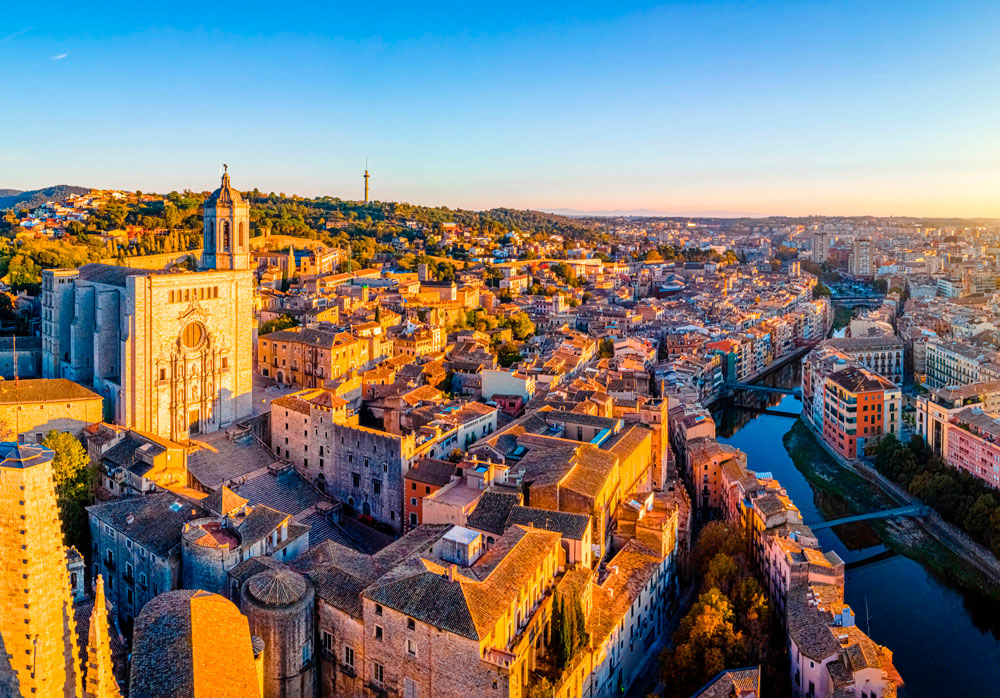
The World Orienteering Championships 2028 will be held in Girona, the capital of the Costa Brava-Eastern Pyrenees, in Catalunya.
The city is located in the northeast of Spain, 61 km south of the border with France, 96 km from the city of Perpignan and 104 km north of Barcelona, which are some of the most important nearby cities, and is very well connected by road, train, air and sea.
The ancient city of Gerunda founded by the Romans in 77 BC to protect themselves from the Iberian settlers of the area, occupies a plain between the mountains of Gavarres and Guilleries where four rivers converge (Ter, Onyar, Güell and Galligants).
Its historic center or old quarter has unique monumental elements in the continent, and is delimited by the passeig de la Muralla, the wall path of the old Carolingian wall (ninth century) and of the late Middle Ages (fourteenth and fifteenth centuries).
Among its monuments are the “call” (the old Jewish quarter, one of the best preserved in the Iberian Peninsula), the colorful houses of the Onyar, the Arab baths and the cathedral, with a single nave, which is the widest in the world in gothic style. Also noteworthy are the Church of Sant Feliu, the Monastery of Sant Pere de Galligants, the Church of Sant Nicolau, or modernist buildings such as the Casa Masó and the Farinera Teixidor. A wonderful city that will host the Sprint events.
The Costa Brava is the Girona sea front, with 200 km between Blanes and Portbou. Full of small coastal villages, beaches, coves, promenades, coastal paths, and plenty of corners where you can enjoy the sun and the sea. The Costa Brava also has natural parks such as Cap de Creus, the Medes Islands or the Aiguamolls de l’Empordà, and a lot of natural landscapes. The Costa Brava is the protagonist in multiple literary works and films such as the mythical “Pandora and the Flying Dutchman” with Ava Gardner, or immortalized in paintings by geniuses such as Salvador Dalí, who lived here. The Costa Brava also features wonderful pine forests and sandy terrains where our participants will enjoy their favorite sport.
Tarragona
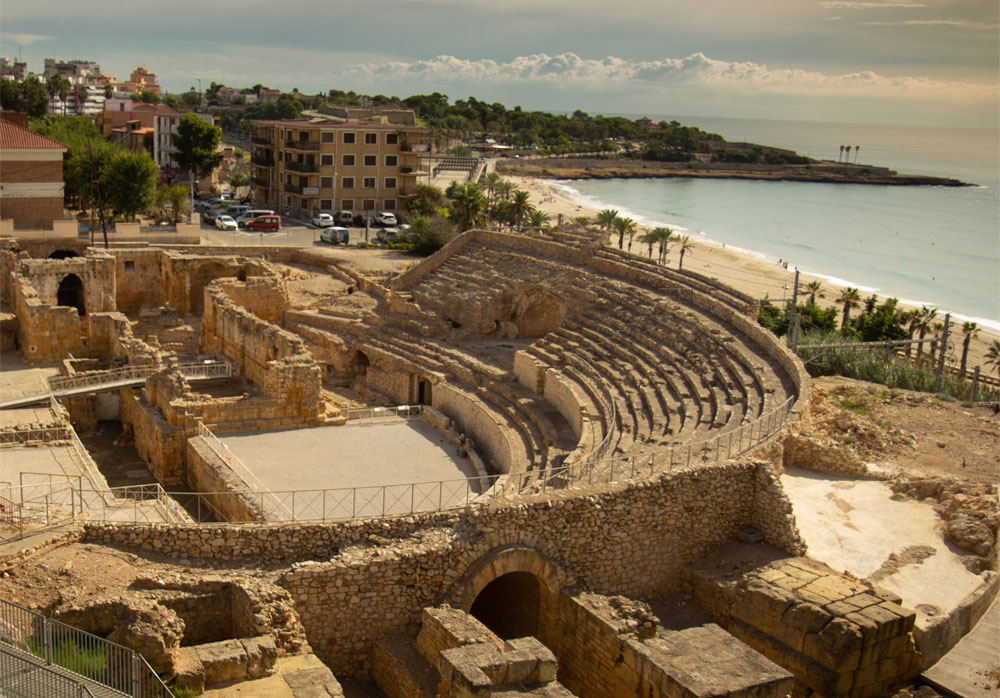
The Orienteering World Cup Round 4 – Finals will be held in Tarragona, the capital of the province of Tarragona and one of the main cities of the Costa Daurada, in Catalonia.
The city is located on the Mediterranean coast, in the northeast of Spain and the south of Catalonia, approximately 100 km from Barcelona. Tarragona is exceptionally well connected, with Reus Airport just 7 km away and Barcelona Airport 82 km away, as well as excellent connections by road, high-speed train, air and sea.
Its strategic location and Mediterranean character make Tarragona an ideal gateway to Catalonia and the perfect setting for the 2027 Orienteering World Cup Round 4 – Finals.
The origins of Tarragona date back more than 2,000 years. In 218 BC, during the Second Punic War, the Romans established a military base that would eventually become Tarraco, one of the most important cities in Roman Hispania and the capital of the province of Hispania Citerior.
Today, Tarragona combines this extraordinary historical heritage with the atmosphere of a lively Mediterranean city. Its historic centre, known as the Part Alta, preserves narrow streets, squares and ancient walls that reflect centuries of Roman and medieval history.
Among its most remarkable monuments are the Roman Amphitheatre, overlooking the Mediterranean Sea, the Roman Circus and Praetorium, the Roman Walls, the Cathedral of Tarragona and the archaeological remains of ancient Tarraco. The Archaeological Ensemble of Tarraco was declared a UNESCO World Heritage Site in 2000, making Tarragona the only World Heritage City in Catalonia.
With its combination of Roman remains, medieval streets, steep passages, squares and changes in elevation, Tarragona offers a spectacular urban environment and an exceptional setting for the Sprint events of the 2027 Orienteering World Cup Finals.
The Costa Daurada is the Mediterranean coastline surrounding Tarragona, known for its golden sandy beaches, mild climate and diverse natural landscapes. Its coastline stretches for approximately 81 km and includes around 60 beaches, from long stretches of fine sand to small coves surrounded by Mediterranean vegetation.
The area combines the sea with pine forests, cliffs, dunes, wetlands and protected natural spaces, including the mouth of the Gaià River, the dunes and wetlands of Torredembarra, Tamarit-Punta de la Móra and the Masia Blanca Marine Reserve.
Tarragona itself offers 14 km of Mediterranean coastline, with beaches, coastal paths and natural areas where forests reach almost to the sea. This combination of urban landscapes, Mediterranean woodland, sandy terrain and coastal scenery makes the Costa Daurada an outstanding destination for outdoor activities and a unique environment for orienteering.
A land shaped by history, nature and the Mediterranean, the Costa Daurada will provide participants and visitors with the perfect setting to enjoy both the competition and their stay in Tarragona.
